
Embarking on your first acting class can be both exciting and nerve-wracking. Whether you’re pursuing acting as a profession or simply want to build confidence and creativity, knowing what to expect can ease any initial anxiety and help you make the most of this experience. Below is a detailed guide to prepare you for your first acting class.
The Environment
Acting classes are designed to be safe, welcoming spaces where participants feel encouraged to express themselves. Most classes take place in studios equipped with:
– Mirrors: To help actors observe their movements and facial expressions.
– Open spaces: For movement exercises, improvisation, or scene practice.
– Minimal furniture: Chairs or props may be used depending on the activity but are usually simple and versatile.
Expect a casual yet professional environment where instructors aim to cultivate creativity and personal growth.
Icebreakers and Introductions
At the start of your first class, you’ll likely participate in introductions or icebreaker activities. This helps establish rapport among classmates while creating a collaborative atmosphere. Be prepared for activities such as:
– Sharing why you joined the class or your experience with acting (if any).
– Fun name games that help everyone learn each other’s names quickly.
– Simple group exercises that encourage teamwork and trust-building.
Warm-Up Exercises
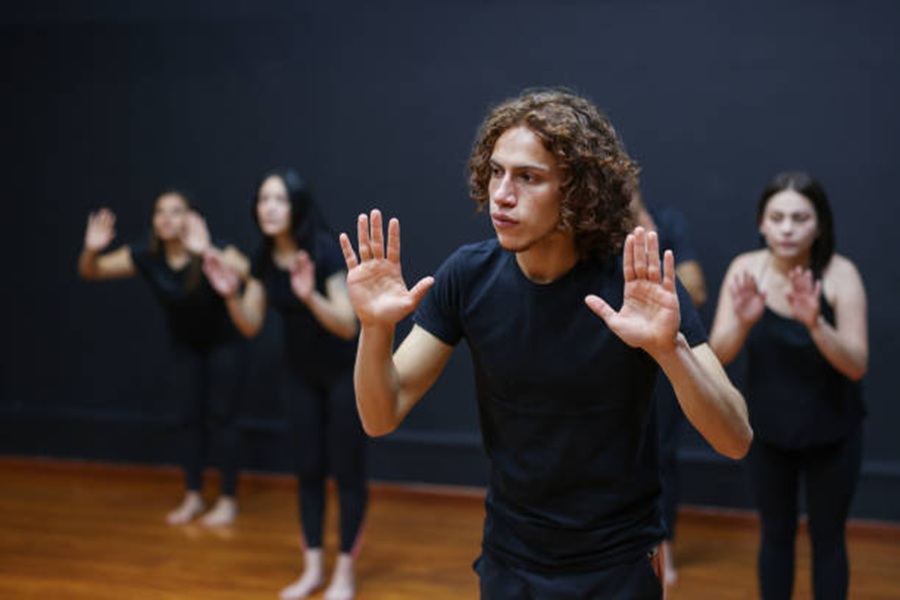
Before diving into more structured activities, classes often begin with warm-ups designed to relax the body and mind while preparing you for performance work. Common warm-up exercises include:
1. Physical stretching – To release tension in muscles and improve posture. 2. Voice warm-ups – Such as humming or tongue twisters to loosen vocal cords. 3. Breathing exercises – Focusing on deep breathing can center your mind and expand lung capacity for projection.
These exercises aim to enhance focus, reduce nervousness, and prepare you physically and mentally for acting.
Core Activities You Can Expect
-
Improvisation Games: Learning how to think quickly on your feet by reacting naturally in unscripted scenarios.
- Example game: “Yes, And” encourages collaboration by building upon what others say.
-
Scene Study: Working on short scenes from plays or scripts helps develop character analysis skills.
- Focus areas include understanding objectives, motivations, and subtext.
-
Monologue Practice: You might start practicing short monologues that showcase emotional range while working solo.
These activities are tailored toward teaching beginners critical aspects of performance dynamics without overwhelming them.
Receiving Feedback
Constructive feedback is an essential part of the learning process in any acting class setting; however, it’s handled delicately during beginner sessions: – Instructors often highlight strengths before addressing areas of improvement. – Peer observations may also be shared but should remain supportive rather than critical.
Treat feedback as an opportunity rather than criticism—it is meant to guide your growth rather than discourage effort.
Top Acting Schools in New York and Must-Try Warmup Exercises for Aspiring Actors
Warmups and games are fundamental elements of acting classes, designed to prepare the body, voice, and mind for performance. Whether you’re a beginner or a seasoned actor, these exercises build confidence, enhance creativity, and foster collaboration among peers. Below is an overview of essential warmup exercises and acting games that can elevate your skills.
Why Are Warmup Exercises Important?
- Help reduce tension in the body and voice.
- Enhance focus and concentration.
- Encourage self-awareness in movement, posture, and breathing.
- Foster a sense of camaraderie with fellow actors.
By engaging in these preparatory routines consistently, you’ll develop better control over your physicality and emotions while acting.
Common Acting Warmups
- Breathing Exercises:
Controlled breathing helps actors project their voices clearly while managing stage fright. - Diaphragmatic breathing: Inhale deeply through your nose for four counts, hold for four counts, then exhale through your mouth for four counts.
-
Humming: Hum softly while exhaling to warm up vocal cords.
-
Stretching:
Flexibility is key to physical expression on stage or camera. Simple stretches include: - Neck rolls to release tension.
- Shoulder shrugs to relax upper body stiffness.
-
Forward folds to loosen the spine.
-
Tongue Twisters:
These improve articulation and diction: - “Unique New York.”
-
“Red leather, yellow leather.” Repeat slowly at first before increasing speed as clarity improves.
-
Facial Warmups:
Engage every muscle in your face by: - Exaggerating facial expressions (smiling widely or frowning deeply).
- Chewing imaginary gum or making fish-like faces.
Popular Acting Games
- Objective: Practice focus while maintaining energy flow within a group.
-
How It Works: Players pass energy by clapping toward one another while saying “Zip,” “Zap,” or “Zop.” Missing a rhythm eliminates players from the round.
- Objective: Build observational skills through mimicry.
-
How It Works: Partners face each other; one begins moving slowly while the other mirrors their motions as precisely as possible.
- Objective: Encourage quick thinking during scene work.
-
How It Works: Two actors improvise dialogue with each line starting sequentially with letters A-Z (e.g., Actor 1 starts with “Apple pie sounds good,” Actor 2 responds with “But we don’t have apples,” etc.).
- Objective: Explore emotional range quickly.
-
How It Works: Actors pass an imaginary object around a circle but must assign it an emotion (joyful laughter when receiving it might turn into sorrowful sobbing when passing it along).
-
- Objective: Strengthen improvisational skills by embracing ideas without denial. – How It Works : One builds narrative jointly forward without contradict others .
Integrating These Techniques
Creating proficiency involves habitual application .Try alternating variety weekly amongst above toolkit
Essential Games and Warmup Exercises to Boost Your Skills in NYC Acting Classes
Acting is not just about delivering lines; it’s about embodying a character, connecting with your scene partner, and fully immersing yourself in the moment. To prepare for this level of performance, actors often start their classes with games and warmup exercises. These activities are designed to break the ice, build confidence, enhance focus, and develop key acting skills. Below is a guide to essential games and exercises that you can expect in acting classes.
The Importance of Warmups in Acting
Before diving into scenes or intensive character work, warming up helps actors:
– Relax their bodies and release tension.
– Prepare their voices for clear projection and articulation.
– Foster mental focus and reduce distractions.
– Build trust among classmates through group exercises.
Common Acting Warmup Exercises
- Breathing Exercises
Controlled breathing is fundamental for actors to manage stage fright and maintain vocal strength. - Diaphragmatic Breathing: Inhale deeply through your nose into your diaphragm (not chest), hold briefly, then exhale steadily through your mouth.
-
Box Breathing: Inhale for 4 counts, hold for 4 counts, exhale for 4 counts, then pause before repeating the cycle.
-
Physical Warmups
Actors use physical exercises to loosen up their bodies so they can perform naturally onstage or on camera. Examples include: - Stretching: Target areas like shoulders, neck, back, and legs.
- Shake-Outs: Shake arms and legs to release tension while counting down from ten.
-
Yoga-Inspired Poses: Poses like child’s pose or downward dog can calm the body while increasing flexibility.
-
Vocal Warmups
These help improve enunciation and ensure clarity when delivering lines: - Tongue twisters such as “Unique New York” or “Red leather yellow leather.” These train diction and help with quick word transitions.
- Humming different notes to warm up vocal cords.
- Articulation drills by exaggerating vowel sounds (e.g., “A-E-I-O-U”).
Essential Acting Games
-
Zip-Zap-Zop
This classic game sharpens focus and builds ensemble energy. Players pass the words “Zip,” “Zap,” or “Zop” around a circle in rapid succession without hesitation. -
Mirror Exercise
Two actors face each other—one leads movements while the other mirrors them exactly as if they were a reflection. This exercise improves awareness of physicality. -
The Name Game with Emotions
Participants say their name aloud but attach an exaggerated emotion (e.g., sadness or joy). It allows actors to explore emotional expression creatively. -
One Word Story
In a group circle, each participant contributes one word at a time toward building a coherent story collaboratively—the exercise boosts improvisation skills while reinforcing teamwork.
Table of Benefits from Warmups & Games
| Activity | Benefit | Skills Developed | Example Exercise |
|---|---|---|---|
| Breathing Techniques | Reduces performance anxiety | Vocal control & relaxation | Diaphragmatic breathing |
| Physical Stretching | Improves flexibility & motion | Body awareness | Full-body stretch routine |
| Vocal Articulations | Sharpens speech clarity | Diction & projection | Tongue Twisters |
| Improvisation Games | Enhances creativity | Quick-thinking & teamwork | One Word Story |
How These Exercises Enhance Your Acting Skills
These games go beyond simple fun—they hone essential acting tools:
– Improve responsiveness during unscripted moments on stage or in auditions. – Develop stronger listening skills so you can react authentically as your character would. – Foster team dynamics critical in collaborative productions like theater ensembles or film sets.
Incorporating these warmups consistently will prepare both your body and mind to take on any role with confidence while strengthening core acting fundamentals over time.
Top Tips for Choosing New York Acting Schools and Improving Your Craft
Feedback and instruction are fundamental components of any acting class. They play a crucial role in helping actors refine their skills, identify their strengths, and address areas for improvement. Whether you are a beginner or an experienced actor, understanding how feedback and instruction function in acting classes can significantly enhance your learning experience.
Role of Feedback in Acting Classes
- Constructive Criticism: Instructors aim to provide actionable suggestions rather than vague remarks. For instance, they may advise improving vocal projection or honing emotional expression.
- Personalized Insights: Feedback is tailored to each actor’s unique needs. This ensures that students receive guidance specific to their current abilities and goals.
- Encouragement & Motivation: Effective instructors balance constructive criticism with positive reinforcement to build confidence while fostering growth.
Types of Instruction Offered
- Teaches how to break down scripts to understand characters, story arcs, and subtext.
-
Helps students make authentic choices while performing.
- Focuses on clarity, projection, intonation, and accents when required.
-
Essential for both stage performance and on-camera work.
- Guides actors in using their bodies effectively to convey emotion or intention.
-
Develops spatial awareness that is critical for stage blocking or camera framing.
- Enhances spontaneity by encouraging quick thinking and creativity under pressure.
-
Prepares actors for unexpected moments during auditions or live performances.
- Provides opportunities to rehearse dialogue delivery while collaborating with others.
- Builds chemistry between actors through repeated practice.
Effective Ways Students Can Process Feedback
| Strategy | Description | Example |
|---|---|---|
| Take Notes | Write down key points shared by your instructor during feedback sessions. | Jot down timing adjustments or emotional cues mentioned by your coach. |
| Ask Questions | Clarify anything unclear by seeking elaboration from your instructor. | “Could you explain how I can make my voice resonate better?” |
| Reflect Post-Class | Spend time analyzing what worked well versus what needs improvement. | Replay recorded performances (if allowed) while reviewing notes. |
Balancing Self-Critique with Instructor Guidance
- Record practice sessions when possible to observe mannerisms or habits unnoticed during class.
- Set personal goals aligned with the feedback provided but remain realistic about what is achievable in a set timeframe.
Remember that both feedback from others and self-reflection work hand-in-hand toward mastering an authentic performance style tailored uniquely for you as an actor
Acting Classes New York – Exercises for the Camera to Practice Like a Pro
Acting for the camera requires a different set of techniques compared to stage acting. On-camera performance demands subtlety, precision, and an awareness of how your movements, expressions, and voice translate through the lens. Below is a breakdown of exercises and practices to help you refine your camera acting skills.
Understanding the Basics: Key Differences Between Stage and Screen Acting
| Aspect | Stage Acting | Screen Acting |
|---|---|---|
| Volume & Projection | Requires amplified voice projection | Subtle vocal adjustments are enough |
| Movement | Larger gestures for visibility | Small, nuanced movements preferred |
| Facial Expressions | Needs exaggeration for clarity | Close-ups capture micro-expressions |
| Audience Focus | Live audience interaction | Focused on alignment with the camera |
These distinctions will guide how you approach on-camera exercises.
Essential On-Camera Acting Exercises
Exercise 1: Mastering Micro-Expressions
- Record yourself delivering a short monologue or dialogue (around 1–2 minutes).
- Focus on controlling subtle facial changes — express emotions with minimal movement.
- Play back the recording to evaluate your range of emotions and adjust accordingly.
Exercise 2: Hitting Your Marks
- Practice moving from one point (mark) to another while keeping natural body language.
- Use tape or objects as markers on the floor during rehearsal. Pay attention to maintaining eye contact with an imaginary scene partner or the lens when appropriate.
Exercise 3: Eye Line Awareness
- Sit in front of a camera at a slight angle. Deliver lines while maintaining realistic eye lines that align with off-screen characters or objects.
- This helps avoid staring directly into the lens unless required by a scene.
Exercise 4: Reaction Shots
- Have someone read lines off-camera while you focus solely on reacting naturally without speaking.
- Experiment with varied emotional responses (e.g., surprise, sadness, joy) based only on what is being said.
Tips for Practicing On-Camera Techniques
- Keep Movements Controlled: For screen acting, less is often more. Overly large motions can appear exaggerated or unnatural when viewed up close.
- Stay Physically Relaxed: Tension in your shoulders or face can distract viewers and take away from authentic performances.
- Practice Speaking Naturally: Use conversational tones in dialogue delivery instead of overly dramatic enunciation.
- Understand Framing: Be mindful of how much space your body and gestures occupy within different types of shots (e.g., close-up vs wide angles).
Practicing Scene Work Alone
- Set up your smartphone as a recording device and use household lighting adjustments for basic setups.
- Choose short scenes from scripts or write original ones that allow room for character exploration.
- Review recordings critically — notice any habits like over-blinking or unnatural pacing in speech.
- Adjust based on feedback from peers or instructors if available.
By incorporating these exercises into your routine, you’ll develop techniques that make your performances shine under any lens.